Every Soundwave Art™ piece starts the same way:
With a sound. It might be a voicemail saved years ago. A wedding song. A child saying “I love you.” A final message you can’t bring yourself to delete. Before it becomes artwork, it’s simply an audio file. So how does that sound transform into something you can hang on a wall — or wear around your neck? Here’s what actually happens behind the scenes.
Step 1: How Soundwave Art Is Made – The Sound Is Captured
Everything begins with an uploaded file. That could be:
- A voice memo
- A song clip
- A wedding vow
- A heartbeat recording
- Even a video file (we extract the audio)
When the file is uploaded, the sound data inside it isn’t visual — it’s a series of digital amplitude values. Those values represent air pressure changes over time.
In simple terms: the ups and downs of the waveform are literally the shape of the sound.
Step 2: The Waveform Is Generated
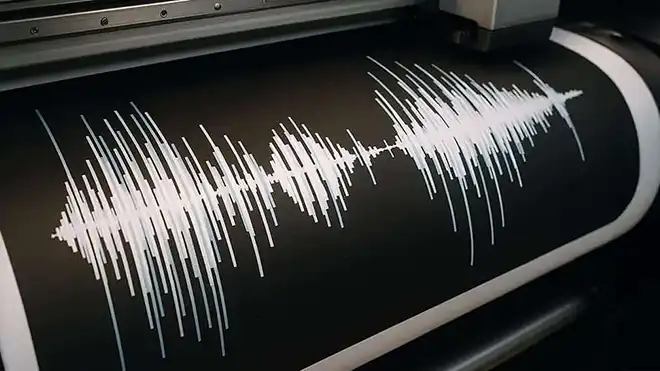
The raw audio is converted into a waveform pattern — a visual representation of volume over time. This isn’t a stock image or a template. It is mathematically generated from your specific recording. Every pause, whisper, laugh, and breath affects the shape.
That’s why no two Soundwave Art™ pieces are ever identical.
The waveform is scaled and centered so it becomes visually balanced — strong enough to stand alone as art, but still true to the original sound.
Step 3: The Design Is Customized
Determaning how Soundwave Art is made is up to you. Once the waveform is generated, it becomes a design element.
You can choose:
- Background color
- Waveform color
- Line thickness
- Text placement
- Font style
- Font color
This is where technology meets design.
The goal is not just to show the sound — but to make it beautiful enough to live in your home.
Step 4: It Becomes Physical
This is where the transformation becomes tangible.
Depending on the product you choose, your soundwave is:
- Professionally printed on photo paper, canvas, or aluminum
- Laser engraved into solid walnut
- Engraved onto jewelry
For engraved pieces like Playable Walnut, the waveform isn’t ink — it’s physically etched into the wood grain. The texture becomes part of the story.
Each material responds differently to the design, which is why scaling, contrast, and detail matter so much during production.
Step 5: It Becomes Playable
The most unique part? Your art can play the original sound.
Using both Augmented Reality and NFC technology, you have the option to make your art playable. The physical piece connects back to the original audio. When scanned, it plays the exact recording that created the waveform.
You’re not just looking at the memory. You’re hearing it.
Why This Process Matters
There are plenty of personalized gifts in the world. Most involve adding a name to something.
Soundwave Art™ is different because it preserves something that cannot be recreated: a moment in time.
A voice changes.
A laugh evolves.
People leave.
Phones get replaced.
But once that audio becomes art, it becomes permanent.
The Emotional Side of the Process
We often think of sound as temporary. You hear it — and it disappears. But when you convert sound into a visual form, you freeze it. You give shape to something invisible.
That’s what makes it powerful. It’s not just decoration.
It’s data.
It’s memory.
It’s presence.
Final Thoughts
How Soundwave Art is made: From audio file to artwork, the journey is both technical and emotional.
Behind every piece is:
- Digital signal processing
- Careful visual balancing
- Material craftsmanship
- And most importantly — someone’s story
Soundwave Art™ turns something you can hear into something you can hold. And sometimes, that makes all the difference.
Create your own Soundwave Art™ from a voice message, song, or heartbeat here.